
ACEMAGIC Intel Mini PCs
ACEMAGIC builds its Intel mini PCs at two very different ends of the scale. At one end are the V1 models with Intel's low-power N150 and N97, four-core chips in a 100 mm box for browsing, documents and streaming. At the other are the M5 and the Mini Gaming PC with HX-class and H-class Core processors, which bring twelve to sixteen cores for development, data work and heavy multitasking. There's very little in between, so the first decision is simple: everyday tasks, or serious CPU work?
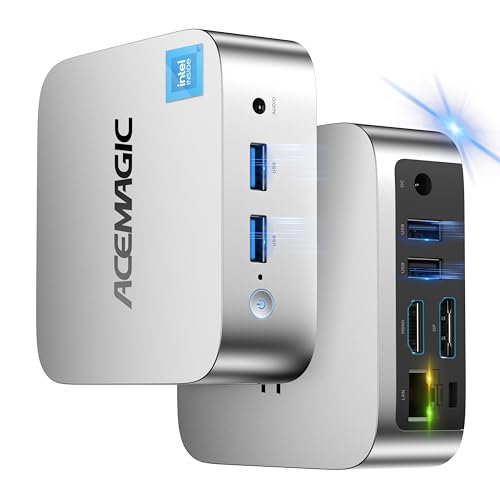
The Intel models
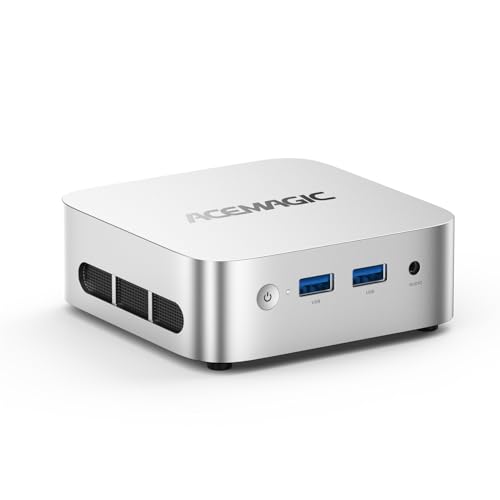
ACEMAGIC V1 · Intel N150, 16GB, 512GB. Four cores and four threads up to 3.6 GHz in a 100 × 100 × 33 mm case. Two 4K 60 Hz outputs, Wi-Fi 6, two 10 Gbps USB-A ports. The single memory slot is already at its 16 GB maximum.
ACEMAGIC V1 · Intel N97, 16GB, 1TB. The same performance class as the N150, with a 1 TB drive. Dual 4K output.
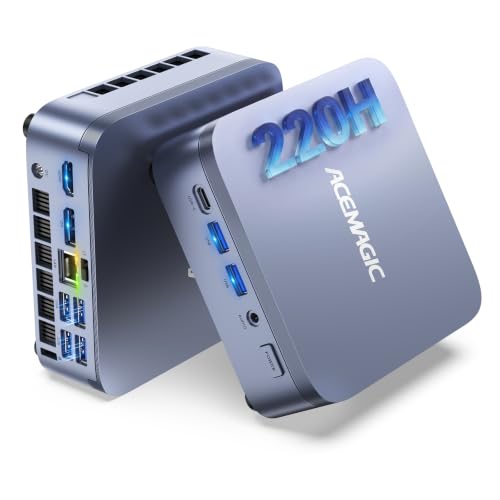
ACEMAGIC M5 · Core 5 220H, 24GB, 512GB. Twelve cores (four performance, eight efficient) and sixteen threads up to 4.9 GHz, at 45 W base power. A modern middle step.
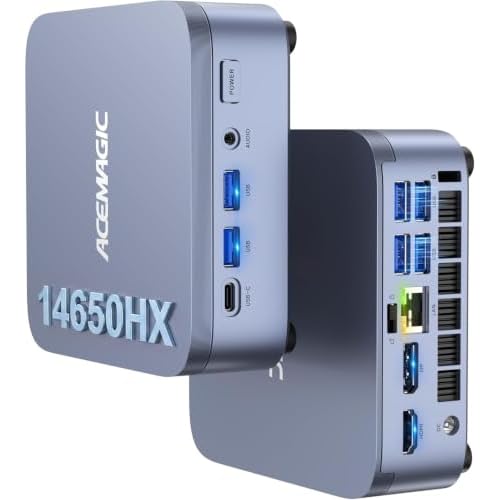
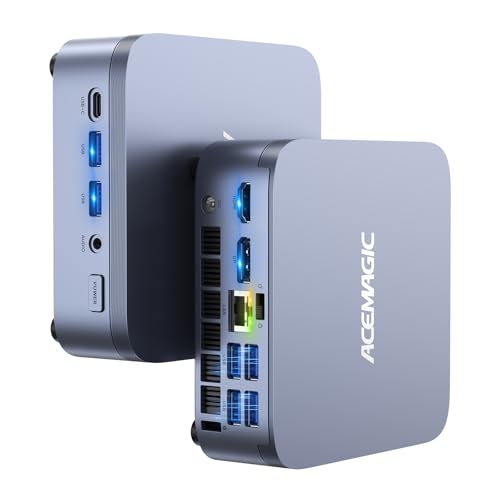
ACEMAGIC M5 · Core i7-14650HX, 16GB, 1TB. Sixteen cores and twenty-four threads up to 5.2 GHz. Two SO-DIMM slots up to 64 GB, a PCIe 4.0 drive plus a second M.2 slot, Wi-Fi 6E, three 4K outputs.
ACEMAGIC Mini PC · Core i7-14650HX, 16GB, 1TB. The same i7 chip, sold as a Mini Gaming PC.
How to choose
Match the chip to the work. N150 and N97 machines are right for email, office apps, web apps, calls and 4K streaming. They're also good always-on boxes for a file server or media library. If you compile code, edit video, run virtual machines or work with large datasets, go straight to the Core models.
Know the graphics limits. Every Intel model here uses integrated Intel graphics. They drive multiple 4K screens and play video well, but none is strong for modern 3D games. If gaming is part of the plan, look at the AMD Ryzen mini PCs with Radeon 680M or 780M graphics.
Think about upgrades. The V1 N150 is fixed at 16 GB and one drive. The M5 with i7-14650HX is the most upgradable machine ACEMAGIC makes, with up to 64 GB of memory and up to 4 TB across two drive slots. For other builds, ACEMAGIC hasn't published the slot layout, so check the product page.
Count your screens. The V1 runs two 4K screens. The M5 i7 runs three, each at 4K 60 Hz, over HDMI, DisplayPort and USB-C.
Consider size and power. The V1 uses a 12 V / 2.5 A adapter and fits behind a monitor. The M5 i7 uses a 19 V / 6.32 A adapter to feed its HX processor.
Core 5 220H or Core i7-14650HX?
Both boost close to 5 GHz, so everyday responsiveness is similar. The i7 has eight performance cores against the 220H's four, and twenty-four threads against sixteen, so it finishes heavy multi-core jobs much faster. The 220H's 45 W base power is lower, which can mean less fan noise in sustained work.
N150 or N97?
They're in the same class: four cores, four threads, 3.6 GHz boost and 6 MB cache. Choose by storage and configuration: the N97 version comes with 1 TB, the N150 version with 512 GB and a fully published spec sheet. See our ACEMAGIC V1 vs Beelink EQ14 comparison for how the N150 V1 stacks up against another N150 machine.